
Cat Ringworm and Fungal Skin: Signs, Spread and Home Care
Round bald patches, flaky skin or broken hair on your cat’s face, ears or paws can be a sign of ringworm — a common fungal skin infection. This guide covers the early signs, why it spreads so easily in a home, and the hygiene steps that support your vet’s treatment.
Important: Ringworm needs to be confirmed and treated by a vet, usually with prescribed antifungal medication. It can also spread to people and other pets. Shampoos and daily care support skin hygiene — they are not a substitute for treatment.
What is ringworm in cats?
Ringworm (dermatophytosis) is a fungal infection of the skin, hair and nails. Despite the name, no worm is involved. The fungus most often found in cats is Microsporum canis. In Malaysia it is often called kurap.
Signs to watch for
- Round or irregular patches of hair loss
- Scaly or flaky skin that can look like dandruff
- Redness, crusting or rough-looking skin
- Broken or thinning hair in one area
- Common areas: face, ears, front legs and tail
Many cats are not very itchy, so ringworm is easy to miss early on. Some cats carry fungal spores without obvious signs.
Which cats are more at risk?
- Kittens, whose immune systems are still developing
- Senior cats or cats that are unwell
- Long-haired breeds such as Persians
- Multi-cat homes, and newly adopted or rescued cats
- Cats kept in warm, humid spaces where fungi survive more easily
How ringworm spreads
Ringworm spreads through direct contact with an infected animal and through spores on shed hair. These spores settle on bedding, sofas, brushes, towels and fabric, and can survive in the environment for months. That is why treating the cat without cleaning the home often leads to repeat cases.
What your vet will usually do
- Examine the skin and coat, sometimes with a special UV lamp (Wood’s lamp)
- Confirm with a fungal culture or hair test
- Prescribe antifungal treatment — oral, topical, or medicated baths/dips
- Recheck until tests show your cat is clear
Treatment usually takes several weeks. Don’t stop early just because the hair starts to grow back.
Home hygiene that supports treatment
- Keep the affected cat in one easy-to-clean room
- Vacuum floors, sofas and resting spots often, and empty the vacuum right away
- Wash bedding, blankets and fabric your cat uses regularly
- Clean brushes, bowls and litter boxes
- Wear gloves when handling the cat and wash your hands afterwards
- After a bath, dry the coat completely — lingering moisture helps fungi
For routine baths, use a shampoo made for pets rather than a human product. Related: Can you use human shampoo on cats or dogs?
Everyday support for skin hygiene
Vet treatment and a clean home matter most. Daily care products can be part of that routine.
Support your cat’s skin hygiene
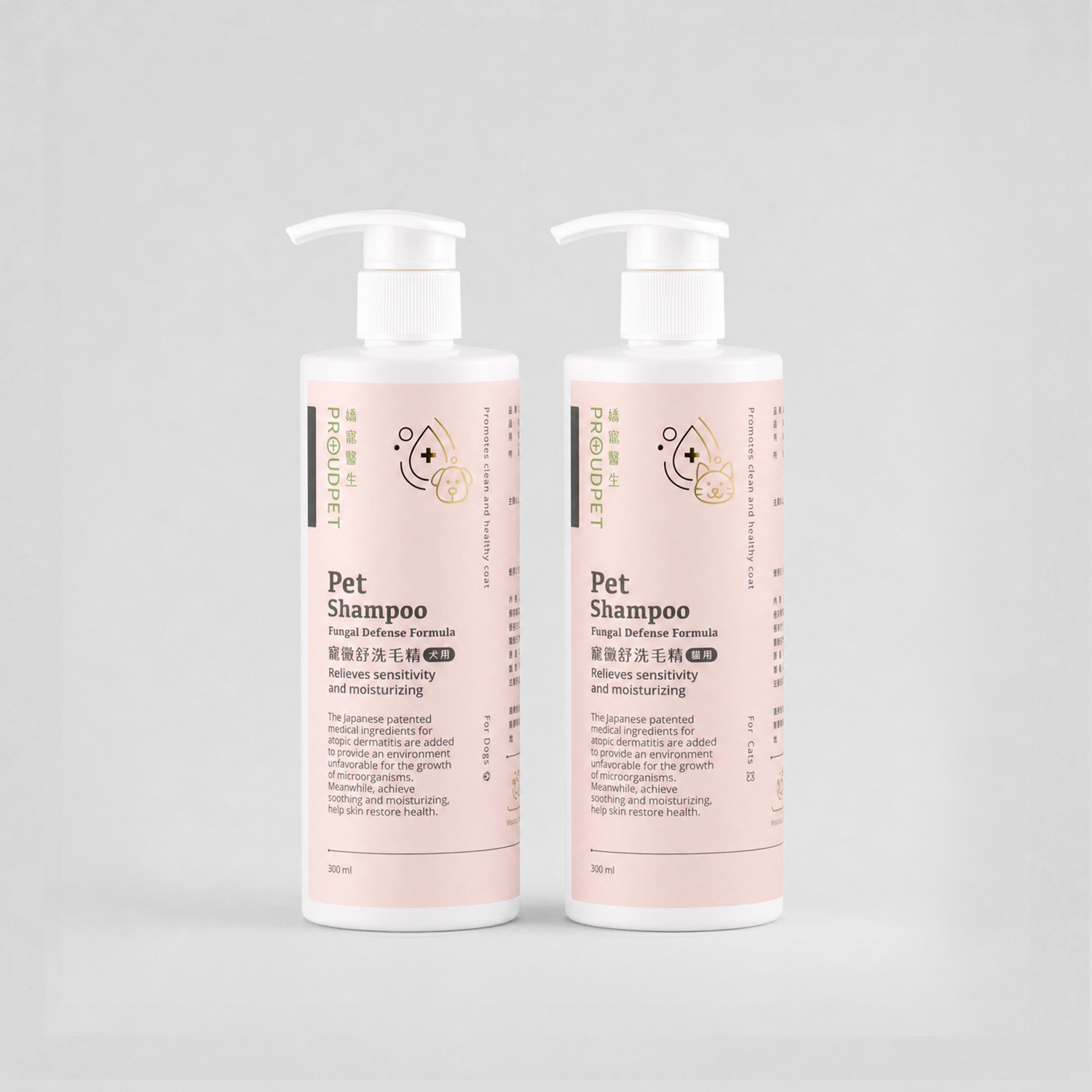
PROUDPET Fungal Defense Formula is a non-medicated shampoo for dogs and cats, suitable for regular baths as part of a skin care routine.
FAQ
Can I catch ringworm from my cat?
Yes. Ringworm can spread from cats to people, especially children. If you notice an itchy, round red patch on your own skin, see a doctor.
Will ringworm go away on its own?
Some mild cases do clear up, but it can take months and keep spreading to other pets and people in the meantime. It is safer to get a vet diagnosis and treatment.
Can I use human anti-dandruff shampoo on my cat?
It’s not recommended. Human shampoos are not designed for cat skin and can cause irritation. Use the shampoo or dip your vet recommends.
Can the Fungal Defense shampoo replace medication?
No. It is a non-medicated shampoo that supports skin hygiene. If your cat is diagnosed with ringworm, follow your vet’s treatment plan.