
Ear Infections in Dogs and Cats: Causes, Signs, and At-Home Cleaning Steps
A pet’s L-shaped ear canal makes infections more likely — and harder to clear — than in humans. Here’s what causes ear infections, the warning signs to watch for, and a proper weekly cleaning routine.
Unlike the straight ear canal in humans, dogs and cats have an L-shaped canal — a vertical section leading into a horizontal one. This structure evolved to protect hearing, which is critical for animals in the wild, but it also means moisture, wax, and debris don’t drain as easily. Breeds like Schnauzers and Poodles also grow extra hair inside the canal for added protection, which can make infections there more stubborn to clear once they start.
Important: This article covers general home hygiene, not treatment. If your pet’s ear already looks infected or painful, see a vet before attempting to clean it yourself.
Who’s more at risk
Ear infections are more common in floppy-eared pets, since airflow into the canal is more restricted, but erect-eared pets can still get them — just less often.
What causes ear infections
- Earwax buildup: Wax is a food source for bacteria, yeast, and fungi, especially when a pet’s immune system is under the weather.
- Ear mites: These mites live in the ear canal and feed on skin debris and fluid. Their crawling and biting causes significant inflammation.
- Allergies: Food or environmental allergies can trigger inflammation in the ear canal, similar to skin allergies elsewhere on the body.
- Improper cleaning: Digging too deep or too often can irritate the canal and make infection more likely, not less.
Signs of an ear infection
Watch for frequent head shaking, scratching at the ears, more wax than usual or wax that looks darker, redness in the canal or outer ear, and increased discharge from the eyes. In more advanced cases, there may be pus-like discharge and a noticeable odour.
A proper at-home ear-cleaning routine
Clean ears weekly, ideally right before a bath. You’ll need: an ear cleanser, cotton, a hair dryer, cotton swabs, ear medication (only if your vet has prescribed it for an existing infection), and tissue or newspaper.
Gently hold the base of the ear flap steady.
Pour ear cleanser into the canal until you can see the liquid level.
This helps absorb excess liquid before the shake-off.
Massage for 15–20 seconds so the cleanser mixes thoroughly with the wax.
Do this over newspaper, or gently blow near the face to encourage a head shake. Repeat steps 2–5 two to three times.
Clean the outer ear with a cotton swab, then dry thoroughly with a hair dryer on a cool or low setting so no moisture is left behind.
How much scratching is normal?
Pets scratch and shake their heads a certain amount every day, and that’s normal — it doesn’t mean an infection. As a rough guide, fewer than about 20 scratches or head shakes a day at home is generally within the normal range. More than that, especially alongside redness or odour, is worth checking out.
A note on ear digging: Leave actual wax removal or deep cleaning to a professional. Digging at home can cause pain and may make your pet fearful or defensive around future ear handling.
Products that fit weekly ear care
Routine cleaning is the simplest way to reduce the odds of an ear infection taking hold.
Best Match
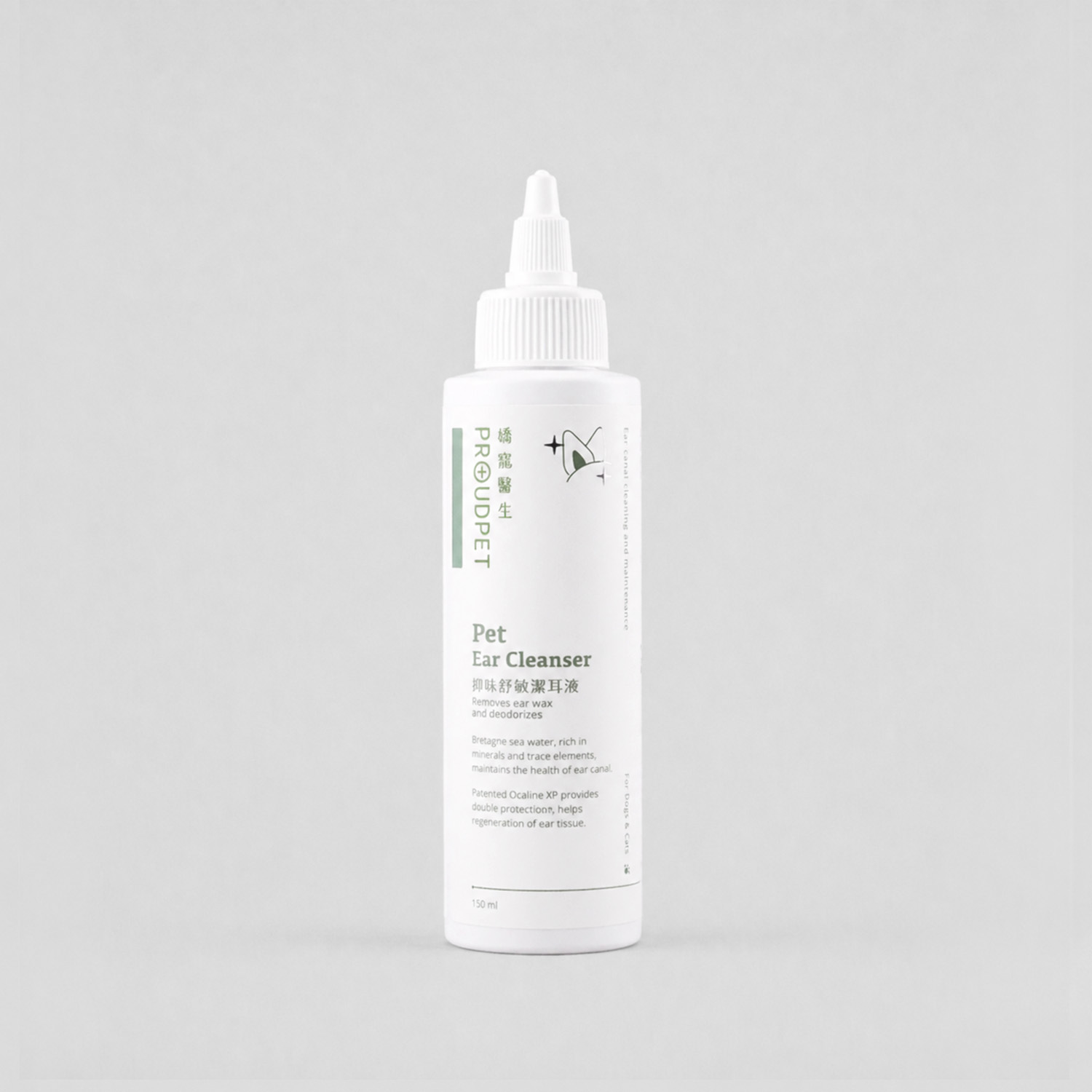
PROUDPET Deodorizing Ear Cleanser
Gentle weekly ear-cleaning solution for cats and dogs.
Facial Care
PROUDPET Amino Acid Facial Cleanser
A gentle cleanser for the face and eye area.
Daily Essentials
Shop Pet Care Products
Browse food, grooming, and daily-care essentials for dogs and cats.
Build ear care into your weekly routine
PROUDPET Deodorizing Ear Cleanser helps remove wax, dirt, and odour while supporting routine ear hygiene for cats and dogs.
FAQ
How often should I clean my pet’s ears?
Weekly is a reasonable routine for most pets, ideally before a bath. Pets prone to infections may need more frequent attention — ask your vet.
Is it normal for my pet to shake its head sometimes?
Yes, some daily scratching and head shaking is normal. It’s the frequency and any accompanying redness or odour that signal a problem.
Can I use cotton swabs deep inside my pet’s ear?
Only use swabs on the visible outer ear. Deep cleaning or wax removal should be left to a vet or groomer to avoid injury.
My pet’s ear already smells bad — can I just clean it at home?
A noticeable odour usually means infection is already present. See a vet first, since a cleanser alone won’t resolve an active infection.