
Cat Chin Acne: Causes, Symptoms, and How to Care for Your Cat’s Skin
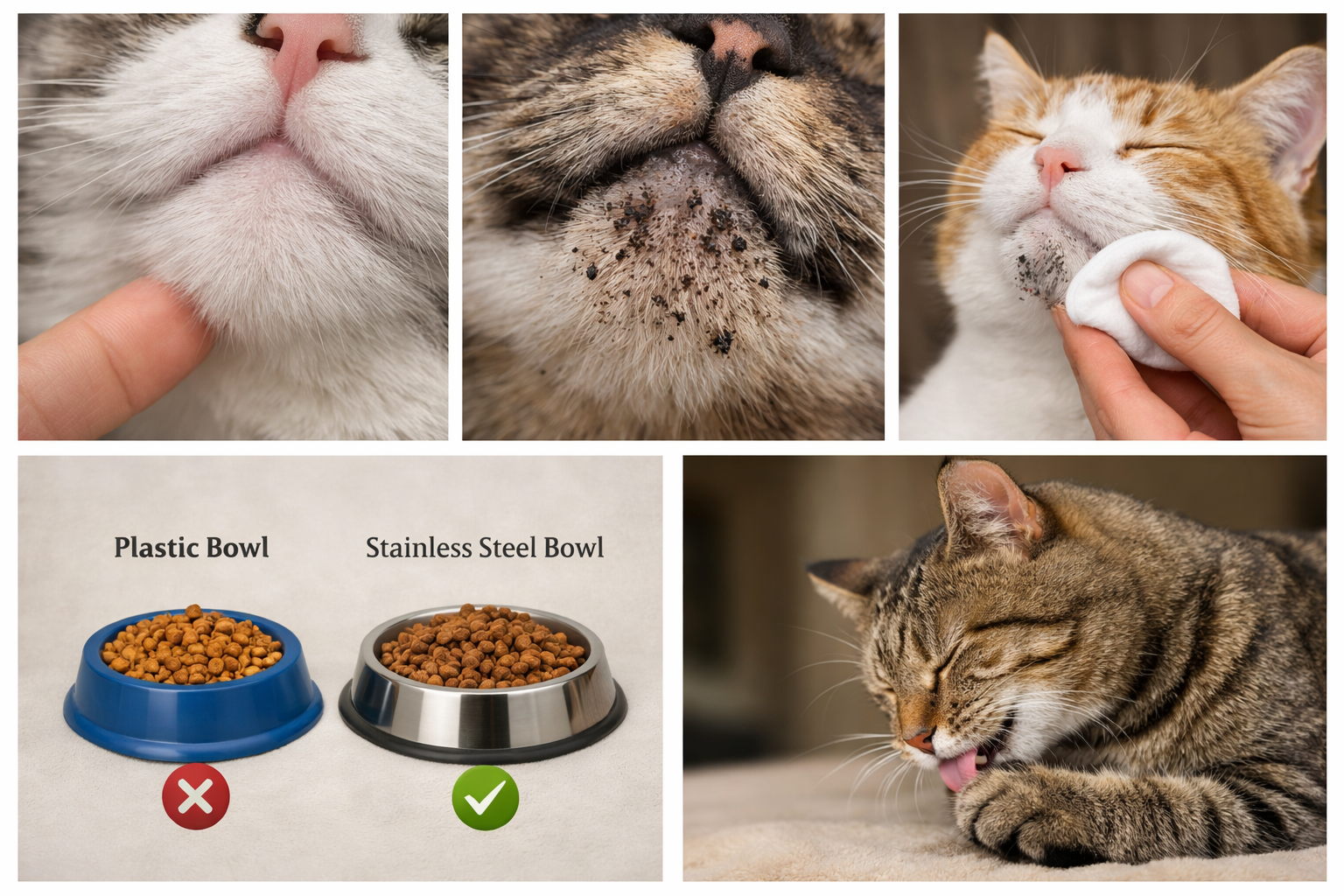
If you’ve noticed small black dots, red bumps, or a “dirty-looking” chin that won’t wipe clean, it’s most likely cat chin acne — a common skin condition also known as cat black chin or feline acne. It’s one of the most-searched cat skin issues, yet it’s rarely explained clearly, so many owners aren’t sure whether it’s serious, contagious, or something that goes away on its own.
This guide covers what cat chin acne actually is, why it happens, the symptoms to watch for, and the daily care steps that help — plus when it’s time to loop in a vet.
What Is Cat Chin Acne?
Cat chin acne happens when hair follicles on the chin and around the mouth get clogged with excess oil (sebum), dead skin cells, and food or grooming residue. Once a follicle is blocked, it shows up as a blackhead, a small red bump, or — in more irritated cases — a swollen, crusty patch.
It’s this same “clogged pore” look that gives the condition its other common name, cat black chin: the chin can appear speckled with dark dots or look dirty even right after cleaning. Chin acne can affect cats of any age, breed, or gender, and — unlike some skin conditions — it is not contagious to other pets.
Quick answer: cat chin acne is common, not contagious, and in most mild cases it’s manageable at home with consistent chin hygiene — but it’s worth monitoring, since it can flare up again if the underlying cause (diet, bowls, grooming) isn’t addressed.
Common Causes of Cat Chin Acne
There’s rarely a single cause — feline acne is usually the result of a few overlapping factors:
- Excess oil (sebum) production that clogs hair follicles
- Poor grooming or difficulty fully cleaning the chin area (common in flat-faced breeds)
- Plastic food or water bowls, which scratch easily and harbor bacteria in the grooves
- Stress or environmental changes
- Poor diet or nutritional imbalance
- Sensitive skin or a genetic predisposition to acne
Symptoms to Watch For
Early detection makes chin acne much easier to manage. Common signs include:
- Blackheads or dark spots on the chin
- Redness or swelling around the chin and lower lip
- Small pimples or pustules
- Crusting or scabbing
- Hair loss around the affected area
- Discomfort or sensitivity when the chin is touched
Left untreated, chin acne can become infected — the skin turns more inflamed, may ooze, and healing takes longer. This is the main reason vets recommend addressing it early rather than waiting to see if it clears on its own.
How to Care for a Cat with Chin Acne
👉 Tip: skin and gut health are closely connected — digestive balance often shows up on the skin first.
When Should You See a Veterinarian?
Home care handles most mild cases, but book a vet visit if:
- Acne becomes severe or visibly painful to the touch
- The area shows signs of infection — pus, bleeding, or noticeable swelling
- Symptoms persist for more than a few weeks despite consistent home care
A vet may prescribe a medicated cleanser or, in infected cases, antibiotics.
Frequently Asked Questions
What causes cat chin acne?
Clogged hair follicles are the direct cause, usually triggered by excess oil, food residue on the chin, plastic bowls harboring bacteria, stress, or diet — see the full list of causes above.
Is cat chin acne contagious?
No. Chin acne is not contagious between cats or other pets — it’s a localized skin/follicle issue, not an infectious disease.
Will cat chin acne go away on its own?
Very mild cases can improve with better hygiene alone, but chin acne often recurs if the underlying trigger (dirty bowls, poor grooming access, diet) isn’t addressed — which is why consistent care, not a one-time clean, is what actually works.
Is cat chin acne dangerous?
Mild chin acne is not dangerous, but it can become infected if left untreated — infected acne is more painful for your cat and typically needs veterinary treatment rather than home care alone.
Why does my cat’s chin look dirty or black?
That “dirty chin” look is usually chin acne (also called cat black chin) — clogged follicles create blackhead-like dark specks that don’t wipe away with normal cleaning, unlike actual dirt.
What does cat chin acne look like?
It typically shows up as small black dots (blackheads), red bumps, or in more irritated cases, crusty or scabbed patches — see the full symptom list above for what to check for.
Should I squeeze or pop the acne?
No — don’t squeeze or pop chin acne yourself, and avoid over-cleaning the area. Scrubbing too often or too hard can irritate the skin further and make the problem worse rather than better; gentle, consistent cleaning is what actually helps.
Final Thoughts
Cat chin acne is usually manageable with consistent care and attention. By improving chin hygiene, switching to safer feeding bowls, and supporting your cat’s overall health, you can significantly reduce flare-ups and keep your cat comfortable.
Healthy skin starts with daily care and understanding your cat’s needs — and for chin that’s already irritated, pairing hygiene with a product actually formulated for feline chin skin (like PROUDPET‘s chin care line) tends to see faster improvement than cleaning alone.
References
PetMD. Feline Acne (Cat Acne).
Available at: https://www.petmd.com/cat/conditions/skin/c_ct_acne
wikiHow. How to Treat Feline Acne.
Available at: https://www.wikihow.com/Treat-Feline-Acne
WebMD Pet Health Center. What to Know About Feline Acne.
Available at: https://pets.webmd.com/cats/what-to-know-feline-acne
This article is written for educational purposes and references information from trusted veterinary and pet health resources.